How long ago January seems to have been. My substack post then (‘Drumf does have a master’) referred to the stock and bond markets reacting against the US President’s tariff wars. His imposition of enormous tariffs on many countries, allies, enemies and others, was curbed only by the immediate reaction in domestic financial markets. The reactions caused a rapid rethinking of his strategy – ‘strategy’? What am I saying? There has been no strategic thought to achieve a considered plan. These were knee-jerk tactics owing more to his need to look decisive and powerful.
Watchers of international financial markets will have noticed that the gap between America’s Gross Domestic Product (the money it makes) and the borrowing it raises in the markets remains in deficit – close to the $2 Trillion mark.
When D.J.T. came to power in his first term, the national debt was $19 Trillion and the debt to G.D.P. ratio was 103%. That wasn’t great, but could be managed with a lively economy. Japan’s ratio has run far higher for years (around 200%) with little trouble. At the time, the new President boasted that he loved debt; he could manage debt. He’d done it all his life – which was true, of course – although I’m not sure bankrupting businesses counts as ‘managing’.
Now, total US debt has just exceeded £40 Trillion. It has more than doubled in the last ten years. The interest servicing cost every year now exceeds one Trillion dollars. This sum is greater than annual expenditure on the military, health, education and so on. The I.M.F. estimates that all-important debt to income ratio as nearing 126% now.
In order to persuade investors, abroad and at home, to buy new issues of debt to replace maturing or new instruments, offered yields are rising well over 5% for the 30-year ‘Long Bond’, the highest level for twenty years. Even the 10-year bond closed near 4.7%. Efforts this week by the Treasury to buy back debt and calm the market have only achieved partial short-lived success. And the real losers are, of course, US consumers who want to buy a house or get some other longer-term loan. Their 30-year mortgages are nudging 7% and may rise further.
Stock indices also plunged by 1% or more overnight when this debt milestone was announced. Other factors, like oil prices and consequent inflation rises apply too, but in my view, it’s the background of the US becoming a less-reliable economic base which makes investors nervous.
In other news, I’m delighted to report that my arch enemies, the slugs, seem to have gone on an extended break, although the likely return of wet weather soon may bring them scurrying home. Their Brothers in Destruction, the squirrels have stepped in to wreak havoc on the tiny amount of produce permitted by our drought conditions this summer.
When you think of Mediterranean countries like Greece, you imagine pine trees, soft and fragrant carpets of dried pine leaves and productive fig trees sheltering from the fierce sun behind stone walls. With the forecast for a hot, dry summer, I had high expectations of our fig tree in the garden.
Hot, sunny weather to ripen fruits – check.
Shelter behind a (wooden) fence - check.
Occasional watering on the hottest of evenings – check.
The harvest has been modest – perhaps a dozen fruits in all. They do taste lovely, with that clean, natural sweetness of fruits picked straight from the tree. But… We are not the only fig-fanciers in the garden. Despite our dog’s best endeavours to yell at marauding furry rodent robbers, he cannot be on duty all the time. They wait until the day before I judge the fruit to have reached its peak of ripeness – and they strike.
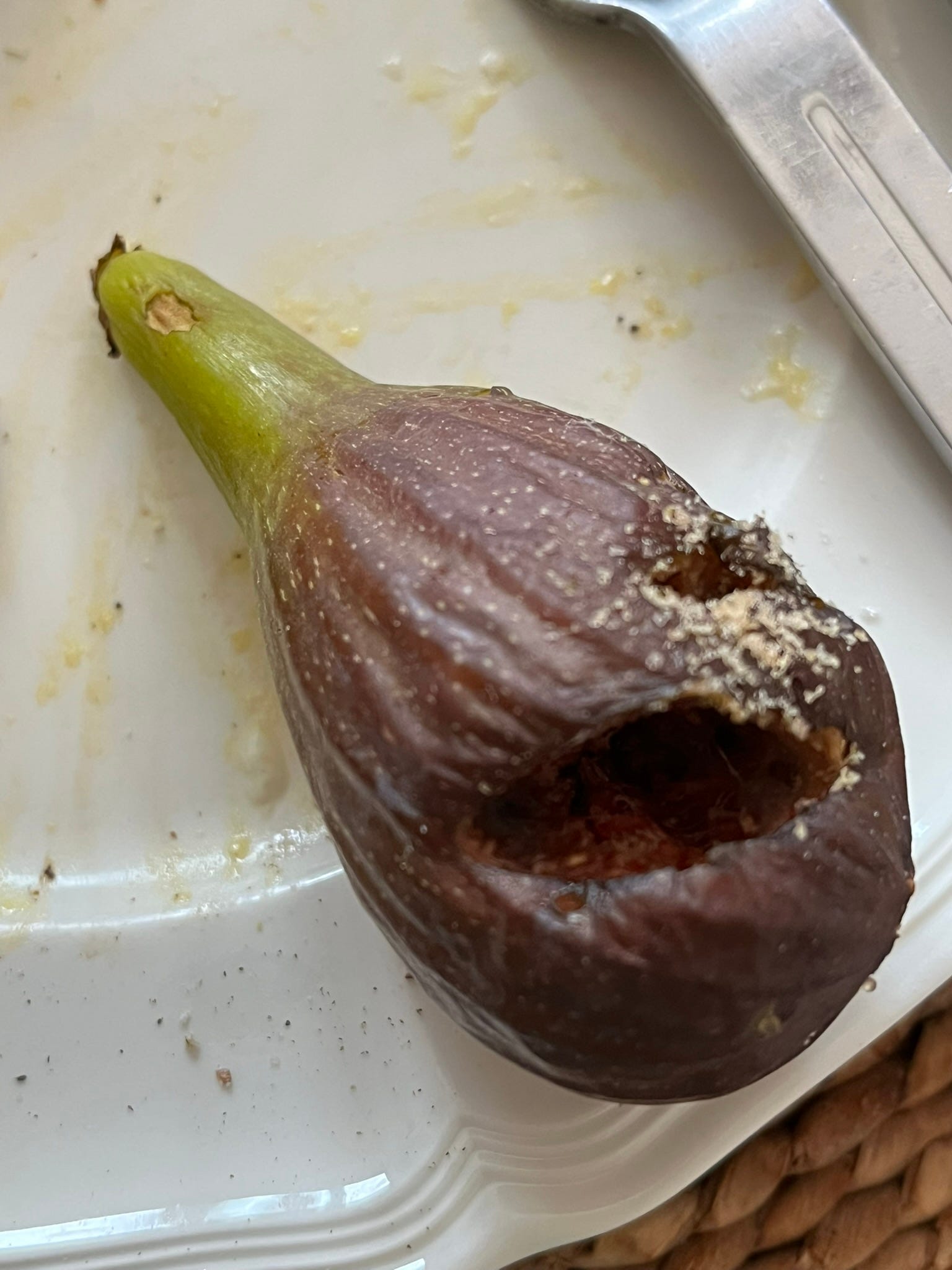
Where’s my airgun..?
In summary, I should admit that our garden debt - expenditure on seeds and plants - exceeds by a large margin our garden income – the value of fruits and vegetables harvested so far. Maybe I shouldn’t be so critical of the US Administration.